Cannabis and CBD in Europe 2026: legal map, WHO opinion and new Spanish law
In recent years, the regulation on the cannabis, the marijuana and its derivatives (CBD y THC) has changed rapidly in Europe. Some countries have taken steps towards legalising recreational use, while others maintain strict policies, limiting use to medical purposes or banning it altogether. This diversity raises concerns for consumers who wish to buy CBD o buy CBD flowers legally and safely. In response to these concerns, we present a map of cannabis legality in Europe, The report analyses the legislation in force in various countries, the recommendations of the WHO and the specific situation in Spain.
We use clear language and transitional words such as on the other hand, in addition, however y in conclusion to make it easier to read for both users and search engines. We also link to articles from official sources and reports from recognised bodies when citing legal or medical data.
Overview of legality
The European cannabis context is varied. Some states have legalised recreational use or implemented pilot programmes for controlled self-cultivation; others restrict use to medical use, and several still have very restrictive policies.
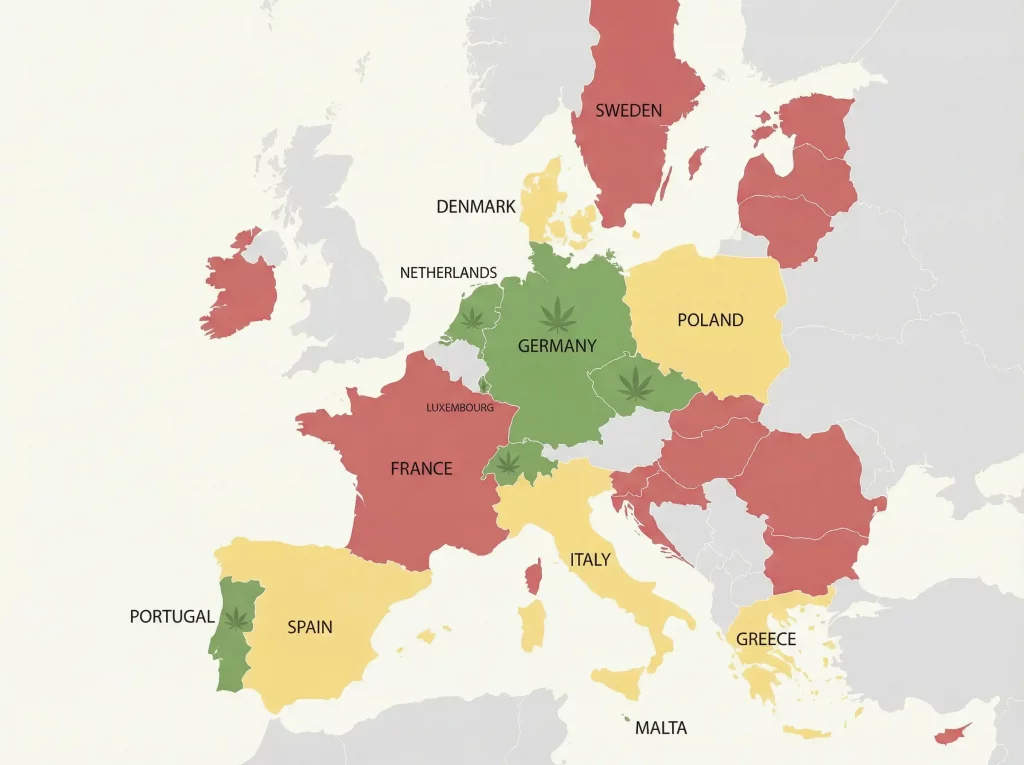
Countries with legalisation or experimentation for recreational use
Germany became in April 2024 the European country with the largest population to legalise recreational use. The Cannabis Act (CanG) allows the possession of up to 25 grams in public spaces and up to 50 grams at home, as well as the cultivation of three plants per adult. It also establishes non-profit associations for cultivation and distribution among members, with limits and quality controls. This makes Germany a benchmark on the continent and has prompted debates on road safety: the government has set a maximum limit of 3.5 μg of THC per litre of blood in drivers to balance risks and freedoms.
Malta was the first EU country to approve home cultivation and private possession of cannabis. According to the European Drug Report 2025, In December 2021, the cultivation of up to four plants per household and the possession of small amounts for consumption in private spaces were legislated; non-commercial cultivation clubs are also authorised. This reform seeks to separate the illicit market from the recreational market and allows adults to grow and consume marijuana for personal purposes.
Luxembourg legalised in July 2023 the cultivation of up to four plants per household and the possession of three grams of cannabis outside the home. Commercial sales remain unregulated, but the law is a significant step forward and a hybrid model between decriminalisation and domestic legalisation.
Czechia (Czech Republic) plans a Cannabis Management Actwhich would allow adult use under state controls. Although the bill has been delayed, the expectation is that it will be passed in 2025. In the meantime, possession and recreational use remain prohibited and only CBD products with less than 0.3 % THC are allowed.
The Netherlands are famous for their coffee shops, where the sale of cannabis has been tolerated since 1976. However, cultivation and production remain illegal; therefore, the government has initiated a Closed Chain Experiment in 10 municipalities. Since April 2025, these establishments can only sell cannabis produced in a regulated manner in order to study its impact on the black market and public health. This is an intermediate step between tolerance and regulation.
Switzerland, The EU, although not a member of the EU, authorised in May 2021 pilot trials to supply regulated cannabis to adults for non-medical purposes. Article 8a of its Narcotic Drugs Act allows these experiments for ten years, providing legal cannabis to controlled groups. This measure aims to generate scientific data for future policy.
Green: Cannabis friendly countries Yellow: Intermediate regulation or medical cannabis Red: Restrictive legislation on cannabis and marijuana
Countries with medical cannabis programmes
Portugal decriminalised the use of all drugs in 2001 and regulated medical cannabis in 2018 for patients with diseases where conventional treatments fail. The products of CBD and oils of hemp can be marketed if they contain less than 0.2 % THC. Although there are discussions about legalising recreational use, no law has been passed.
Poland legalised medical cannabis in 2017, but recreational use remains prohibited. CBD products are legal if the THC content does not exceed 0.2 % (0.3 % from 2022). Public opinion and the political climate do not favour legalisation of adult use.
Greece has allowed the prescription of medical cannabis since 2017 for conditions such as epilepsy or chronic pain. Recreational use is not allowed, although CBD is legal at less than 0.2 % THC. Dispensing of domestically produced medical products started in 2024.
Belgium medical cannabis is administered through a state agency that has a monopoly on distribution. Only licensed drugs such as Sativex® or Epidyolex® are marketed - although their availability is limited. Recreational use remains prohibited and supplements with THC below 0.2 % are subject to strict regulation.
France maintains restrictive policies. A clinical trial with some 2,000 patients evaluates the efficacy of medical cannabis, but its continuation is in doubt. Recreational use is illegal and CBD products with less than 0.3 % THC are in a grey area.
Italy medical cannabis is allowed, but by 2025 the Decree-Law 48/2025classified industrial hemp flowers as controlled substances and banned their sale, cultivation and possession. The new regulation restricts the use of CBD for prescription pharmaceutical purposes. This tightening contrasts with the liberalising trend in other countries.
Denmark implemented a medical cannabis pilot programme in 2018 and, in April 2025, the Parliament adopted the Law L135, which makes medical access permanent. The legislation establishes that all doctors can prescribe cannabis for any illness if they deem it appropriate and clarifies licences for cultivation, manufacture and distribution. In addition, guidelines for prescribers are updated and driving restrictions are revised. Thus, Denmark ensures sustainable access for patients and stability for the industry.
Countries with very restrictive policies
Belgium, France e Italy have already been mentioned for their limitations on recreational use and their strict control of medical cannabis. They are joined by countries such as Sweden, Finland y Hungary, where both recreational and medicinal use are highly regulated and possession can carry severe penalties. At Sweden y Hungary there is no official medical programme; in Finland, Only a small number of patients receive imported medical cannabis. Most of these countries do not allow CBD products with more than 0.2 % THC.
The WHO's view on cannabis and CBD
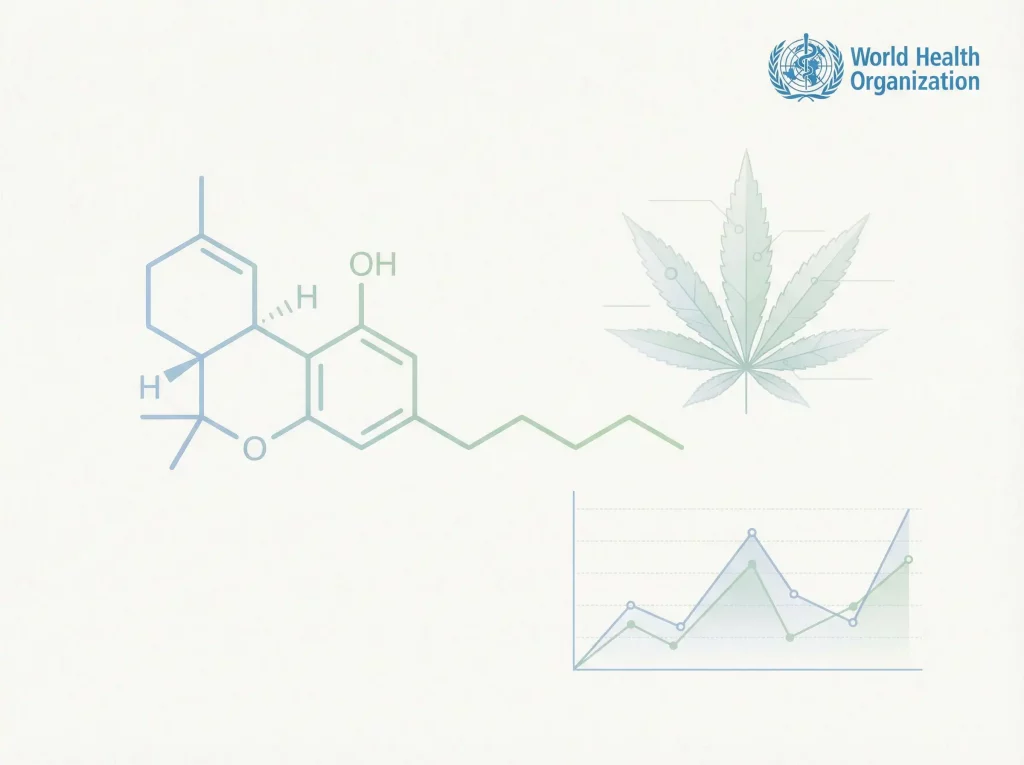
The World Health Organisation (WHO) is a key player in the international scheduling of substances and has reviewed cannabis and CBD on several occasions. At the session of the Expert Committee on Drug Dependence (ECDD) 2017, it was concluded that the pure cannabidiol (CBD) has no potential for abuse or harm, The report noted that there is no evidence of dependence and left it to national legislators to regulate it. The report noted that there is no evidence of dependence and left it to national legislators to regulate.
In the Q&A document of August 2018, The WHO recommended that CBD preparations “should not be subject to international control” because they lack psychoactive properties and do not present a risk of abuse or dependence. However, it clarified that this recommendation does not imply promoting its medical use; it is about adjusting its classification in international treaties. In addition, the WHO acknowledged preliminary evidence of CBD's efficacy in certain forms of epilepsy and stressed the need for further clinical trials.
In 2019, the WHO director general sent recommendations to the United Nations to update the classification of cannabis and its derivatives, highlighting their emerging therapeutic value but insisting on preventing diversion and abuse. These proposals have encouraged several European countries to revise their laws, although each state retains autonomy to regulate according to its context.
WHO and the scientific evidence on cannabis and CBD in public health
Spain: current situation and new regulations
In Spain, recreational cannabis use remains illegal. The sale of CBD is legal if THC does not exceed 0.2 %, but there is a regulatory gap for food supplements and cosmetics. The country has taken an important step with the Royal Decree 903/2025, approved by the Council of Ministers on 7 October 2025. This regulation establishes a legal framework for the medicinal use of cannabis by means of magistral formulae.
Keys to Royal Decree 903/2025
Restricted prescription: Only medical specialists may prescribe standardised cannabis preparations and only to patients with severe pathologies (chronic refractory pain, severe epilepsy, spasticity due to multiple sclerosis, nausea and vomiting due to chemotherapy, etc.).
Dispensing in hospitals: Magistral formulae shall be prepared and dispensed only in hospital pharmacies. There shall be no sales in community pharmacies.
Registration and control: The AEMPS will set up a public register of standardised preparations; Each product shall comply with THC/CBD, quality and traceability parameters. The monographs shall define indications, dosage and conditions of use.
Joint monitoring: The prescribing physician and the hospital pharmacy will jointly monitor the efficacy and adverse effects of treatments.
Transitional situation:The decree still needs to be ratified by Congress and the AEMP.S must publish the monographs. In the meantime, only hospital preparations will be available to patients; the consumption of flowers or smokable extracts is not allowed.
Context and perspectives
Royal Decree 903/2025 responds to the demand of patient associations and the recommendation of the Congressional Health Committee. Spain is thus moving closer to other countries that offer controlled treatments, although the regulation maintains limited and highly supervised access. The decision has been welcomed by medical organisations, which value the possibility of prescribing precise formulations, but has also generated debate because it excludes the use of flowers and commercial CBD products with a high THC content.
Tips for CBD consumers and buyers
Find out about current legislation: Before buy CBD or marijuana in Europe, check the laws of the country where you live or travel. The legality changes depending on the THC content and the therapeutic or recreational purpose.
Review certificates of analysis: Make sure that the CBD flowers and other products include a certificate proving that THC does not exceed the permitted limit (0.2 % in Spain, 0.3 % in Germany and the Czech Republic, etc.).
Buy in specialised shops: Choose shops that offer advice and whose products have clear traceability and origin. Look for quality seals and verified reviews.
Consultation with health professionals: If you intend to use cannabis for medical purposes, talk to a doctor. Only a professional can recommend the right dosage and ensure safe use.
Conclusions
The map of cannabis legality in Europe reflects a diverse reality: while Germany, Malta, Luxembourg and Switzerland are moving towards controlled adult use models, countries such as Portugal, Poland, Greece and Denmark offer medical cannabis on prescription. Other states maintain restrictive positions or have even tightened their rules, such as Italy. The WHO endorses the medical use of cannabis and considers that the CBD lacks abuse potential, but underlines the need for further research. Spain has taken a momentous step with the Royal Decree 903/2025, although its scope remains limited to the hospital setting.
For those who wish to buy CBD or find out about the marijuana In Europe, it is essential to be aware of these legal differences, to choose reliable suppliers and to respect national laws. The cannabis industry is evolving rapidly; staying informed is key to responsible and safe use.
Las trufas mágicas son esclerocios que contienen psilocibina, un compuesto natural que altera la percepción. En los últimos años han ganado popularidad por sus efectos y creciente interés. Descúbrelas de la mano de Iguana Smoke.
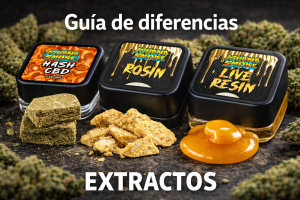
Descubre las principales diferencias entre hash, rosin y live resin, tres de los extractos de CBD más populares del mercado. Aprende cómo se elaboran, qué los hace únicos y cuál elegir según tus preferencias en cuanto a pureza, aroma y experiencia.
thelyflabs
31/03/2026
Manage consent
We use our own and third-party cookies for analytical purposes and to show you personalised advertising based on a profile of your browsing habits. You can customise your preferences by clicking on "Preferences", accept all cookies by clicking on "Accept", or reject them by selecting "Reject". For more information, please see our privacy policy.
Functional
Always active
The technical storage or access is strictly necessary for the legitimate purpose of enabling the use of a specific service explicitly requested by the subscriber or user, or for the sole purpose of carrying out the transmission of a communication over an electronic communications network.
Preferences
The technical storage or access is necessary for the legitimate purpose of storing unsolicited preferences of the subscriber or user.
Statistics
Technical storage or access that is used exclusively for statistical purposes.Storage or technical access which is used exclusively for anonymous statistical purposes. Without a request, voluntary compliance by your Internet service provider, or additional records from a third party, information stored or retrieved solely for this purpose cannot be used to identify you.
Marketing
Technical storage or access is necessary to create user profiles to send advertising, or to track the user across a website or across multiple websites for similar marketing purposes.
 PERSONALISED ATTENTION
 FREE SHIPPING TO MAINLAND SPAIN FROM 40€.
 ⭐ 9/10 RATING
 DISCRETED SHIPPING